

What results can be expected from GEO optimizations ?
What results can be expected? How can they be measured?
AI LLMs and web search oriented LLMs are still in their first steps. They are evolving rapidly, but the ecosystem of tools available to content creators for measuring and optimizing their efforts is still limited.
Even thought, it safe to say that the following conditions drastically increase the likelihood of being cited by AI LLM models:
- The user's query is specific and uncommon (therefore fewer sources of answers).
- The website's content is relevant to this question (therefore more likely to be relevant).
For example, at the time of writing, virtually all AI LLMs will cite my website if you ask the following question:
How to run a Flask app on a Plesk server ?
On ChatGPT :

On Perplexity :
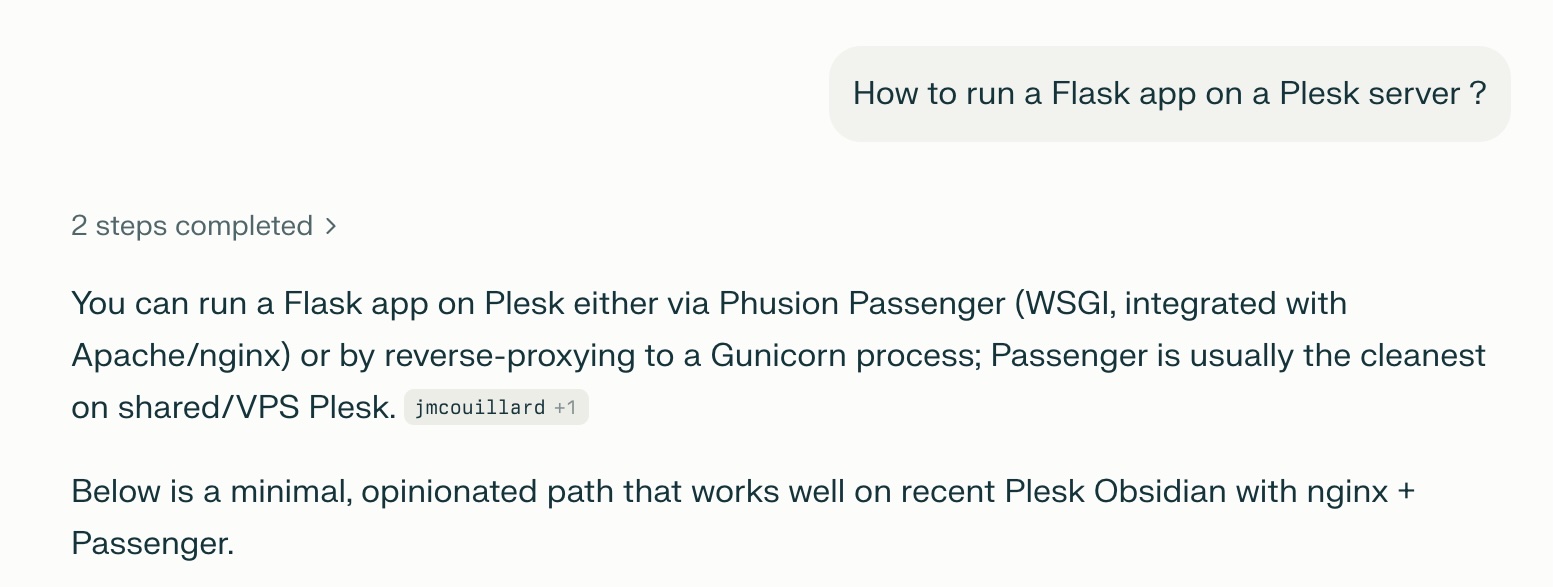
As illustrated, in all my tests, this article is used in the answer.
This is easily explained: the two conditions mentioned previously are met. The probability of being included and cited in the answer is then very high:
- This is a very specific and uncommon query: few people use Flask, and most of those who do don't use Plesk.
- The content of my site is directly related to the user's request in this article: Flask Python Applications on Plesk
To visualize which sources are used for a query, Perplexity is currently the tool that most clearly expose its sources. It can be a useful tool for testing changes you make to your website or its content and measuring their impact.
All articles in the series
Back to the series
Why create and optimize content for AI?

How to write relevant GEO optimized content

How to optimize (GEO) a website for generative AI (LLMs)
What results can be expected from GEO optimizations ?
